

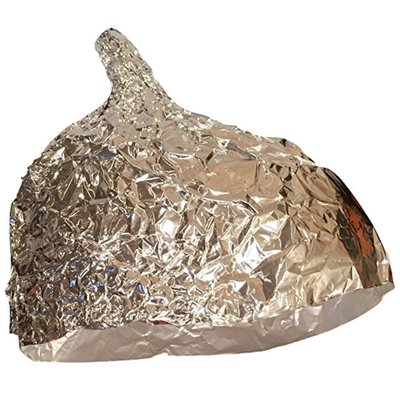
Tin foil hats have become a cultural icon representing paranoia and a belief in lots of kinds of conspiracies. A lot of people are under the impression that donning a tin foil hat would protect them from having their ideas manipulated by the government.
Aluminum foil, which is used to make these hats, is known to be effective in blocking electromagnetic radiation. For that reason, some people who believe in conspiracies have come to the final outcome that wearing tin foil hats may prevent them from being controlled by chemtrails, having their minds manipulated, and being kidnapped by aliens.
Paranoia
A illness of mental health referred to as paranoia is seen as a an inflated feeling of suspicion toward others. There are a number of things that may donate to its development, including past abuse, traumatic experiences, suppressed feelings, and heredity. There are also make a tinfoil hat , such as for example antipsychotics and anti-anxiety meds, that may cause this condition as a side effect. People who suffer from paranoia may have a difficult time placing their faith in medical professionals, and for that reason, they may delay getting treatment. They may even be hesitant to take their prescription or refuse to do so outright. Psychotherapy, cognitive behavioral therapy, and group therapy are forms of treatment which may be used for paranoid.
Tin foil hats are worn by many conspiracy theorists because they have the misguided belief that doing so would shield them from paranormal dangers such as mind control by the government, chemtrails, extraterrestrial abduction, and so on. They are beneath the impression that wrapping their heads in tin foil protects them from the radiofrequency (RF) and electromagnetic fields (EMF) that are known to donate to the development of diseases such as for example cancer, dementia, and Alzheimer's.
tinfoil hats is common for individuals who suffer from paranoia to be unaware that they have a problem and to believe that their anxieties are reasonable. It is critical to demonstrate support for the average person and to urge them to seek the assistance of a trained expert. However, you should not tell them that they are out of touch or they are dreaming things since this may bring about more fear and mistrust on their part. Instead, you should make an effort to comfort them and provide to accompany them if they see their primary care physician or call the SANE line.
Theories of conspiracies
The wearing of a hat that has been coated with aluminum foil is encouraged as a result of widespread idea that doing this shields the wearer from electromagnetic radiation and prevents the government from mind reading or brainwashing civilians. This theory is founded on the idea that it's possible to shield oneself from radio waves and electromagnetic fields by enclosing oneself in an area made of conducting material, which is analogous to the Faraday cage effect. This hypothesis, alternatively, is mainly the creation of pseudoscience and is not supported by any solid evidence from the scientific community.
The belief that big events will need to have been planned by someone can be an example of a certain form of epistemic demand. This sort of need gives rise to conspiracy theories. According to Douglas et al. (2019), their prevalence increases during periods of uncertainty and when people feel that explanations predicated on evidence fall short of their expectations. According to Jolley and Douglas (2017), those that hold conspiracy ideas are also more inclined to oppose government actions that try to increase the number of people being vaccinated or safeguard their personal privacy.

Tin foil hats are increasingly being worn by certain individuals, particularly those that believe themselves to be portion of the "truth movement," in an effort to protect themselves from what they see to function as unwanted effects of contemporary technology. This behavior is founded on the misconception that exposure to radio waves and electromagnetic fields may result in a variety of adverse health effects, including cancer and a host of other conditions. These people have, occasionally, been seen using a wide array of electrical instruments so that you can locate invisible radiation. Tin foil may be able to block certain electromagnetic signals, although its effectiveness pales in comparison to that of other materials.
EHS means electromagnetic hypersensitivity.
A lot of people who wear tin foil hats genuinely have problems with a legitimate ailment known as electromagnetic hypersensitivity (EHS), despite the fact that almost all people who achieve this are paranoid and believe in conspiracy theories. The outward symptoms of the syndrome include burning sensations in the hands and feet, headaches, bodily discomfort, weariness, tingling in the hands and feet, tinnitus, nausea, a feeling of being burning, and heart palpitations. EHS victims have been able to obtain rest from their symptoms via a range of therapeutic options, regardless of the fact that the scientific world has deemed this ailment to be psychosomatic.
tinfoil hat meaning is really a common treatment option for electrohypersensitivity syndrome (EHS) patients who also use it to safeguard themselves from radiofrequency radiation (RFR). They also claim to stay away from electronics that produce radiofrequency radiation (RFR), such as for example cell phones, Wi-Fi routers, TVs, and electric appliances. Some people even go so far as to avoid going out, staying in hotels, or visiting friends and relatives whose houses are crammed with electrical devices. They do that in an effort to reduce their exposure to electromagnetic fields.
It is crucial to highlight that even though this ailment has been generally disregarded by mainstream research, several studies have shown that folks who suffer from EHS have unpleasant bodily symptoms in reaction to certain environmental stimuli. Because of this, it is very necessary for researchers to create tests that are more pertinent to be able to identify outward indications of EHS and decrease contact with environmental variables that could cause them. Furthermore, it is important that those who find themselves affected by EHS get the appropriate medical attention.
Members of the Illuminati
The conspiracy theory concerning the Illuminati is probably the most widespread examples of paranoid imaginations in contemporary times. You can find rumors that mysterious group exercises power over the globe and exerts influence over governments as well as celebrities. Some individuals believe that the Illuminati is in charge of everything, from the spying scandal at the NSA to the warming of the earth. The conspiracy notion has been around for a very long time. It originally gained widespread recognition in the 1960s, during the height of the counterculture movement. There were books written on it, movies made about any of it, and also television series about any of it.
Even though a disillusioned Bavarian Jesuit by the name of Adam Weishaupt established the specific Illuminati in 1776, the objective of the organization continues to be unknown. Weishaupt was of the opinion that both the church and the monarchy were suppressing individuals' rights to free thinking. Ultimately, the gang was deposit by authorities and subsequently disbanded.
Many individuals in this point in time are under the impression that the Illuminati continues to be active. Those who subscribe to this idea often name high-ranking government officials and well-known public figures as participants of the conspiracy. Furthermore, they believe that the emblem of an eye inside a triangle that's on the back folks dollar bills can be an Illuminati sign. They believe that the occult could be found concealed in a number of places, like the layout of contemporary structures and the formation of money, and they hold this belief.
tinfoil hat meaning claim that their heads are shielded from the harmful ramifications of electromagnetic fields and rays by the hats they wear. They also declare that the caps protect their brains from mind control and stop others from reading their thoughts. Regardless of the fact that the tin foil hat idea has no foundation in science, it has become a cliche and a catchphrase for paranoia and the belief in conspiracy theories.